

Fast snapshot: why the player choice matters
Choosing an HD player isn’t just about resolution—it’s about control, timing, and how a feed translates across dozens (or hundreds) of tiles. Start with how your intended content meets the display chain: a robust player feeds the scaler and video processor cleanly, minimizes latency, and hands off reliable signals to your video display control layer. Think of Times Square’s huge LED canvases: the scene works because every component, from source to pixel, is tuned for scale and consistency.

What HD players actually do
At base, an HD player decodes source media, outputs synchronized frames, and often handles pixel mapping or basic color calibration. Hardware players tend to embed a scaler and framebuffer to keep timing tight; PC-based players give flexibility but need more maintenance. Industry terms to watch for: scaler, pixel mapping, video processor. Each term points to a practical capability you either need or don’t.
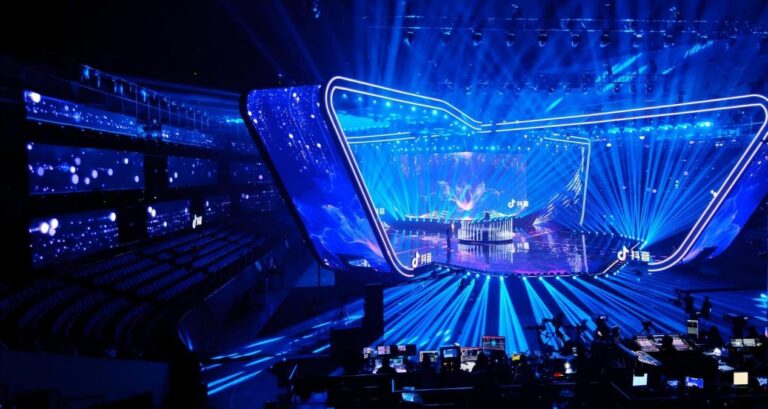
Architectures compared — hardware, PC, and media servers
Hardware players: compact, low-latency, reliable for fixed playlists. Great for signage that must run 24/7. PC-based players: flexible, cheap to prototype, but they can suffer from thermal throttling and driver quirks. Media servers: engineered for creative shows, offer advanced effects and multi-layer compositing but cost more and require experienced operators. Consider bezel compensation and refresh rate when you compare: high refresh rate smooths motion on large canvases; bezel compensation ensures the image looks whole despite tiny gaps. Pick the architecture that matches your operational skillset and uptime needs — not the fanciest spec sheet. — Small teams often try media servers for everything and trip on complexity.
Common mistakes in deployment
Three recurring pitfalls: under-spec’ing bandwidth, ignoring color calibration across panels, and skipping redundancy. During operational production teardown, document signal paths and include {main_keyword} and {variation_keyword} as labeled checkpoints so technicians know which feed goes where. Overlooking the HDMI matrix capacity or relying on a single player for mission-critical walls invites downtime. Also, don’t ignore pixel mapping quirks—incorrect mapping produces jitter or wrong color alignment.
Alternatives and integration: controllers and control layers
You’re not choosing a player in isolation. The right videowall controller ties sources, scaling, and output routing into a predictable system. Simple projects might use an embedded controller; complex installs need matrix routing, synchronized playback, and networked management. Evaluate interoperability: can your player export timing metadata to the controller? Does the controller support bezel compensation and color profiles? Those answers shape the deployment complexity and long-term maintenance budget.
Checklist for selection
– Match I/O to real needs: count HDMI/SDI ports and look at bandwidth per stream. – Verify sync and genlock options if you run multiple players in parallel. – Confirm support for pixel mapping and bezel compensation for your LED modules. – Plan for color calibration workflows and whether the player can carry LUTs or requires external color management. – Test under real content: multiple layers, motion, and peak brightness. These checks expose hidden compromises early and save costly rework.
Advisory: three golden rules for picking the right HD player
1) Prioritize reliability metrics: mean time between failures (MTBF) and thermal design—choose systems rated for continuous operation. 2) Demand signal fidelity: ensure the player preserves frame integrity and supports your target refresh rate and resolution without dropped frames. 3) Insist on integrated control: the player must hand off clean, documented outputs to your videowall controller and support remote monitoring. When you run through these metrics, you move from hope to predictable outcomes—and that predictability is priceless on big installs. Kystar. –