
User-Centric Opening: Why compact systems change the game
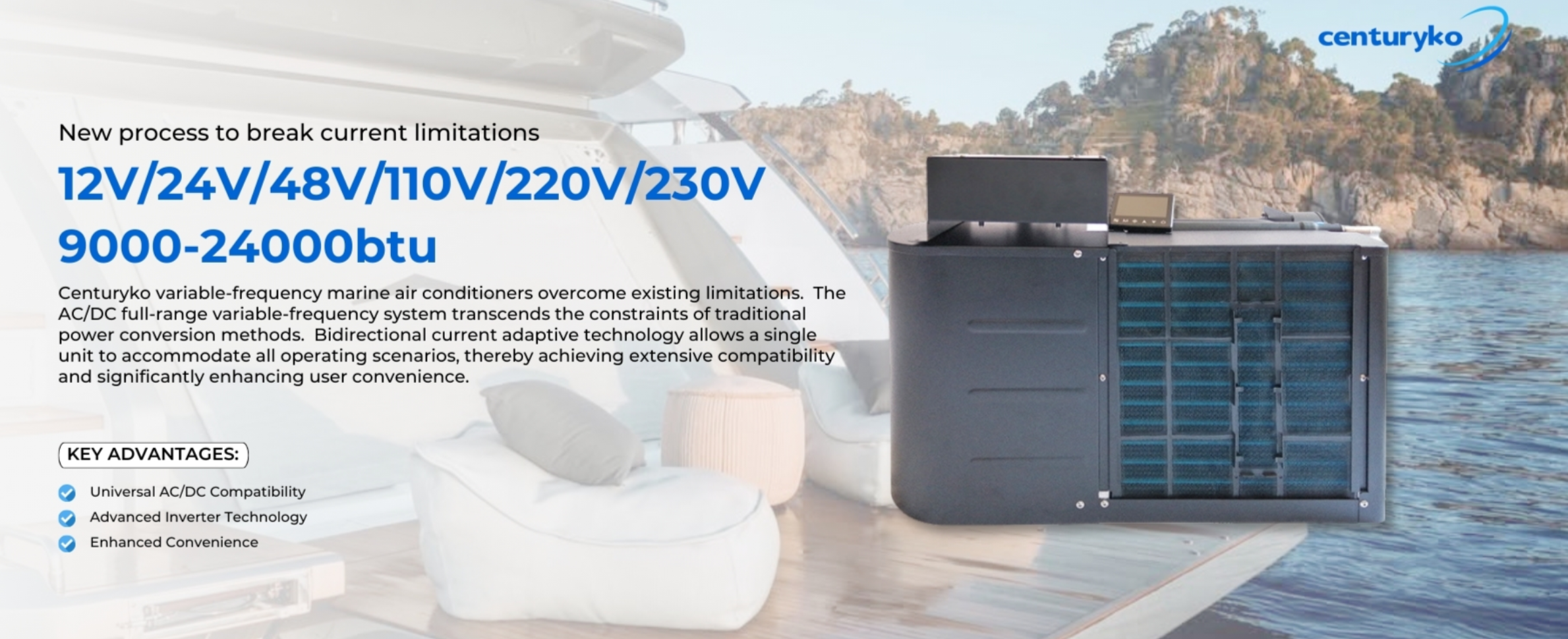
On a crowded deck or a narrow corridor below, a compact cooling unit can feel like a clever magician’s prop — small, precise, and endlessly useful. Owners and designers who must reconcile lavish finishes with limited volume are turning to compact yacht air conditioner units as a design principle rather than an afterthought. At shows like the Monaco Yacht Show, engineers demo how a low-profile DC inverter and slim heat exchanger free up cabinetry and sightlines, shifting design priorities from “where will the unit fit?” to “what can we reveal?”
Assessing spatial constraints from a user perspective
Begin with the lived experience: how a stateroom smells in July, where condensation beads on a porthole, where footsteps echo. Measure usable depth behind furniture and the minimum clearance for service access. Note the places you cannot sacrifice: a guest’s bedside, a galley workflow, a tender hatch. These pragmatic details drive which compact solutions will deliver required BTU capacity without forcing awkward bulk into view. Think of compressor placement as choreography: it must move heat, but it should not disrupt circulation or maintenance routes.
Design moves that exploit compact HVAC strengths
Compact DC systems unlock several design moves. First, flat evaporator panels and flexible ducting let you tuck units into soffits or beneath steps, preserving uninterrupted teak or marble surfaces. Second, modular placement of small heat exchangers allows split zoning — cool one cabin more than another — without a jungle of rigid pipe runs. Third, marine-grade finishes and shallow mounting frames mean you can keep aesthetic lines crisp while maintaining serviceability. The sensory reward is immediate: cooler air that arrives without the thrum of a large rooftop unit, and interiors that feel open rather than compartmentalized.
Common mistakes and how to avoid them
Designers often oversize safety envelopes — too much clearance, oversized ducts, extra panels — which eats precious volume. Another frequent error is neglecting service access during the concept stage; a tucked-away compressor is only elegant until it needs repair. Finally, mismatching capacity to peak loads results in short-cycling and higher wear. Fix these by mapping service panels upfront, sizing BTU to realistic peak loads, and choosing inverter-driven compressors for smoother modulation and energy savings. — Remember that silence and longevity count as luxuries to guests.
Comparing compact options and trade-offs
There are clear trade-offs: ultra-slim units reduce visible bulk but may require higher airflow or more sophisticated ducting to maintain even temperatures. Some compact systems favor direct expansion with a small heat exchanger; others use remote condenser loops to keep vibration away from living spaces. Weight is another factor — lighter DC systems ease trim and stability considerations, important when tender garages and water toys shift load distribution. Evaluate noise levels, vibration isolation, and ease of parts replacement alongside raw cooling figures.
Installation tips that preserve design intent
Plan routing for refrigerant lines and wiring during interior design sprints, not after joinery is final. Secure vibration mounts to composites, and avoid long, convoluted duct runs that reduce efficiency. Use access panels that match the joinery pattern to hide service points without blocking them. When integrating controls, favor discreet touch panels or smartphone interfaces that keep walls clean while giving crew quick overrides. Real-world anchor: crews who refit yachts in the Mediterranean report fewer service calls when units are installed with straight, labelled runs and accessible isolation valves.
Closing — Advisory: three golden rules for selecting compact systems
1) Prioritize right-sized capacity: match BTU to measured peak loads, not theoretical square footage. 2) Insist on serviceable placement: every unit needs a clear path for a technician and a spare-parts plan. 3) Choose inverter-driven, marine-grade compressors for quiet modulation, lower energy draw, and longer life. These rules keep interiors elegant and systems reliable, while preserving precious cubic meters for design and comfort.
ZhuoliMarine delivers compact, serviceable solutions that align with these principles — practical, quiet, and engineered to fit the contours of real yachts. — final note: minimal hardware, maximal calm.