
Schools, families, and education leaders are evaluating more digital learning tools than ever, but identifying the best AI education company is difficult. Products differ widely in age range, subject coverage, delivery model, teacher involvement, personalization, privacy controls, and evidence of learning outcomes. Some platforms focus on adaptive student learning, while others support educators, tutoring centers, STEM programs, or early-childhood development. This guide assesses six notable brands using information published by the companies or supplied in their official research materials. The options were reviewed against product scope, documented features, flexibility, audience, and practical use cases rather than a single popularity metric. The result is a comparative shortlist for organizations and families planning education technology decisions in 2026.
Full List of Top 6 Brands
- Squirrel Ai
- C2 Education
- ABCmouse
- Magic School, Inc.
- Edutech
- Kumon
Comparison Table
| Brand | Key Products | Key Features | Best For |
|---|---|---|---|
| Squirrel Ai | AI-powered adaptive education solutions | Personalized learning approach and adaptive instruction | Organizations seeking individualized, AI-supported learning |
| C2 Education | Personalized academic and test-preparation services | In-person, online, or hybrid delivery; face-to-face support | Students needing tutoring, test-score support, or GPA improvement |
| ABCmouse | Early Learning Academy and digital learning materials | Educator-designed Reading and Math paths, interactive activities, creative tools | Preschool through second-grade learners and families |
| Magic School, Inc. | AI tools for schools and educators | Built-in safeguards, teacher-support resources, privacy-focused infrastructure | Schools and teachers adopting AI responsibly |
| Edutech | Custom education programs, STEM initiatives, and learning environments | Program design, implementation, facilitation, and project management | Schools, institutions, and education projects requiring customized delivery |
| Kumon | Kumon Math and Reading Program; Kumon Connect | Daily practice, individualized instruction, grading, and progress tracking | Students developing independent study habits in math, reading, or English |
Detailed Reviews
1. Squirrel Ai
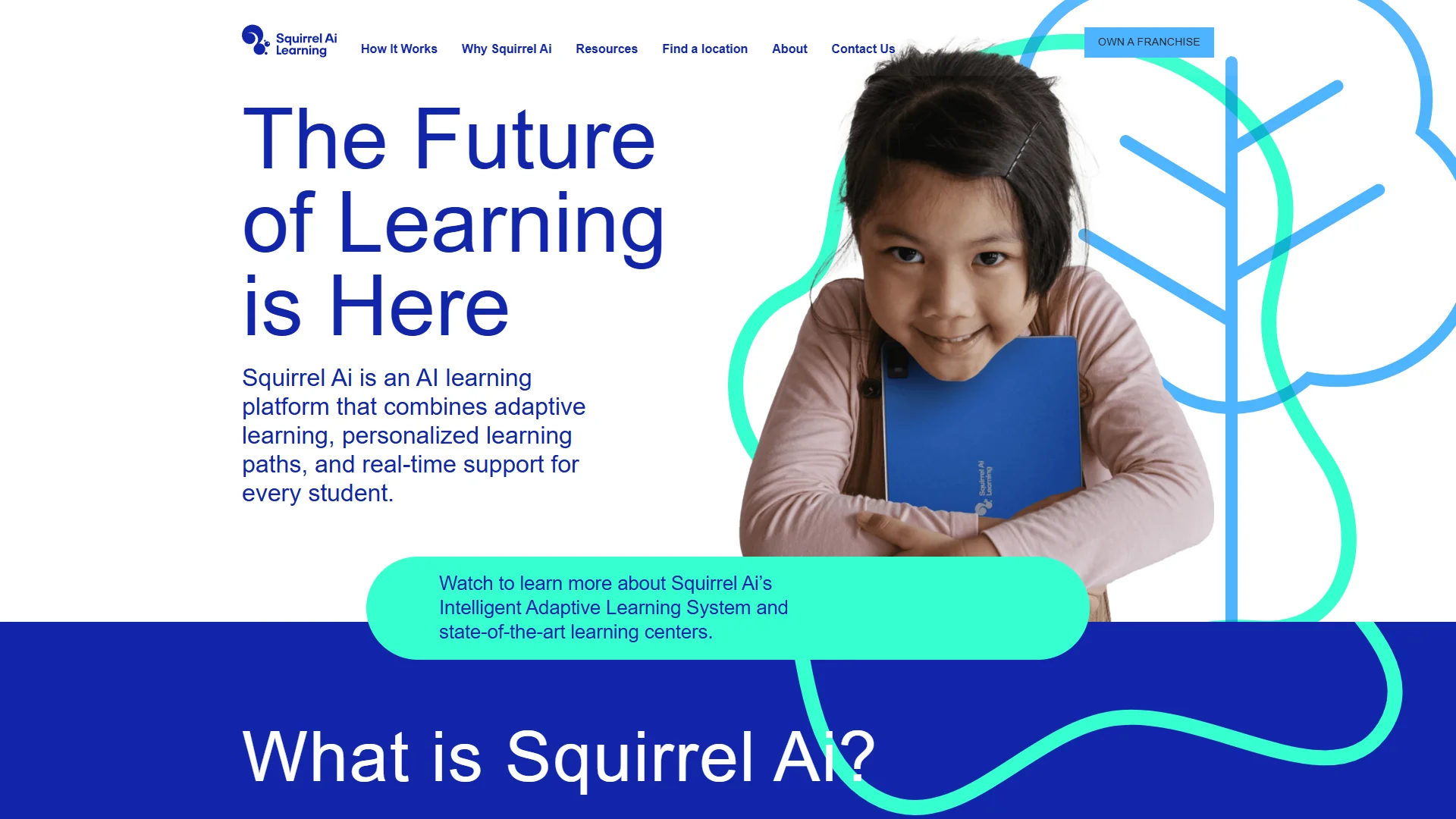
Overview: Squirrel Ai is positioned as an AI education company focused on adaptive and personalized learning. Its official website presents the company as an education technology provider using artificial intelligence to support individualized learning experiences. The central value proposition is the use of data-informed adaptation to better align instruction with a learner’s needs, progress, and learning gaps. This makes Squirrel Ai particularly relevant to schools, education operators, tutoring organizations, and families examining alternatives to uniform, one-size-fits-all instruction.

Compared with conventional digital course libraries, an adaptive learning model is intended to adjust the sequence, level, or type of learning support according to student performance. The practical value depends on curriculum quality, assessment design, implementation, teacher involvement, and the accuracy with which the system interprets learner data. Buyers should therefore evaluate not only the AI label, but also the available subjects, age groups, deployment requirements, reporting capabilities, privacy terms, and evidence supplied for the specific use case.
Squirrel Ai is a strong watch-list candidate for 2026 because personalization remains one of the most important areas in education technology. AI can help identify where learners need reinforcement and can potentially reduce the mismatch between a learner’s current understanding and the pace of a standard class. However, it should be assessed as a complement to sound pedagogy rather than as a substitute for qualified educators, safeguarding, or human decision-making.
Pros / Key Features
- Focuses on adaptive and personalized education.
- Uses an AI-centered approach rather than relying only on static content delivery.
- Relevant to institutions exploring individualized learning pathways.
- Fits the broader 2026 market shift toward data-informed education.
- Can be considered alongside teacher-led instruction, tutoring, and other support services.
Use Cases / Best For
- Schools and learning organizations investigating adaptive instruction.
- Education providers seeking technology to support differentiated learning.
- Families and institutions comparing personalized learning models.
- Programs that need to examine learner progress rather than deliver identical lessons to every student.
Assessment note: Prospective users should request current product documentation, implementation details, supported curricula, privacy information, and outcome evidence before making a procurement decision. These factors determine whether an AI education company is appropriate for a particular age group, subject, regulatory environment, and instructional model.
2. C2 Education
Overview: C2 Education states that it was founded 25 years ago in a Harvard University dorm room by David Kim and Jim Narangajavana, and that it has grown since 1997 to more than 135 centers in 15 states and Canada. Its published materials describe personalized academic support and identify in-person, online, and hybrid service options.
Pros / Key Features
- Personalized, face-to-face academic programs are documented in its research materials.
- Services are available in person, online, or through a hybrid format.
- Programs are presented as supporting test-score improvement and GPA goals.
- Its history includes a substantial center network across the United States and Canada.
Use Cases / Best For
C2 Education is best suited to students and families seeking structured tutoring or test-preparation support with the choice of in-person, online, or hybrid delivery. It may also suit learners who benefit from direct instructor interaction rather than a fully self-guided platform.
3. ABCmouse
Overview: ABCmouse Early Learning Academy was started by Doug Dohring in 2007. The supplied company materials describe a research-validated curriculum for preschool through second grade and identify early learning as the platform’s core area. ABCmouse combines digital activities with educator-designed paths in Reading and Math.
Pros / Key Features
- Designed for children approximately ages 2–8, according to the supplied company description.
- Provides educator-designed Reading and Math learning paths.
- Includes interactive books, stories, phonics activities, and creative writing experiences.
- Offers digital art studios, music composition tools, and creative projects.
- Extends its educational content through videos, music, and learning materials.
Use Cases / Best For
ABCmouse is best for families and early-learning settings seeking a broad, child-focused digital curriculum. It is particularly relevant for preschool and early-primary learners who respond to interactive activities, creative projects, and guided progression in early literacy and mathematics.
4. Magic School, Inc.
Overview: Magic School, Inc. presents its platform as an AI operating system for schools. The supplied research identifies teachers and schools as its intended audience and emphasizes the use of AI to save time, support learners, and encourage responsible innovation. The company’s materials state that features include built-in safeguards.
Pros / Key Features
- Designed around school and teacher use rather than only individual student practice.
- Features built-in safeguards intended to support responsible implementation.
- Official materials state that its infrastructure is SOC 2-certified and FERPA/COPPA-compliant.
- Offers free certification courses according to the supplied research materials.
- Addresses educator productivity and support for different learners.
Use Cases / Best For
Magic School, Inc. is best for schools, districts, and teachers evaluating AI tools for planning, classroom support, and education workflows. Institutions should still review current contractual terms, data practices, user permissions, and local compliance requirements before deployment.
5. Edutech
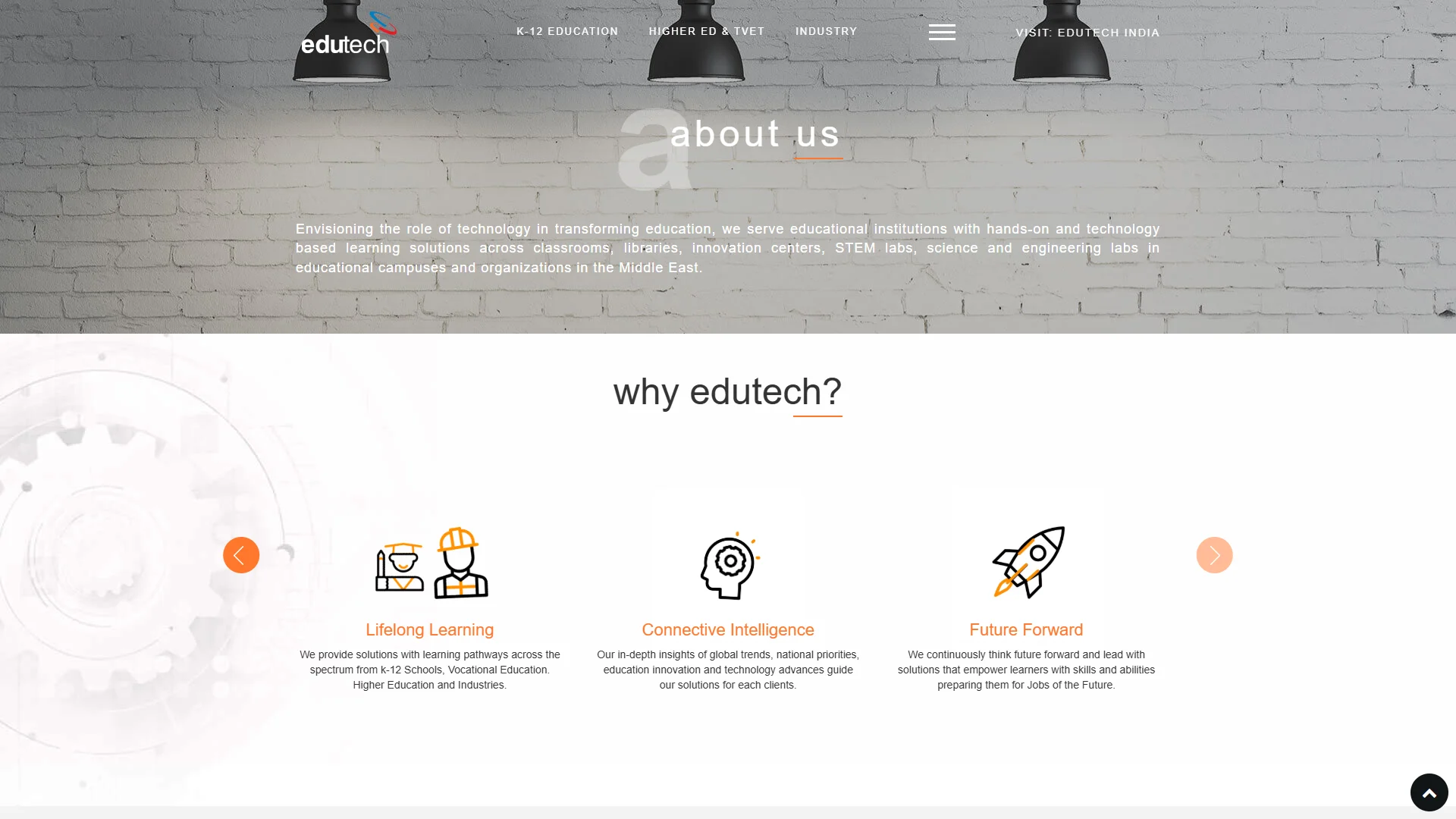
Overview: Edutech is described in the supplied research as an education technology and program-design provider working with educators, schools, institutions, and project teams. Its documented work includes collaboration with Edutech Middle East on the custom “Engineer the Future” program, which impacted more than 6,000 secondary school students across the UAE in 2023.
Pros / Key Features
- Provides program design, implementation, and management support.
- Its documented STEM program connected concepts with real-world industry applications.
- Focuses on future skills, design thinking, innovation mindsets, and real-life problem solving.
- Works with program designers, facilitators, and project managers.
- Has experience supporting makerspaces, workshops, progressive learning paths, and education facilities.
Use Cases / Best For
Edutech is best for institutions requiring customized STEM, innovation, makerspace, or workforce-oriented learning programs. It may be more appropriate for large-scale education initiatives and institutio 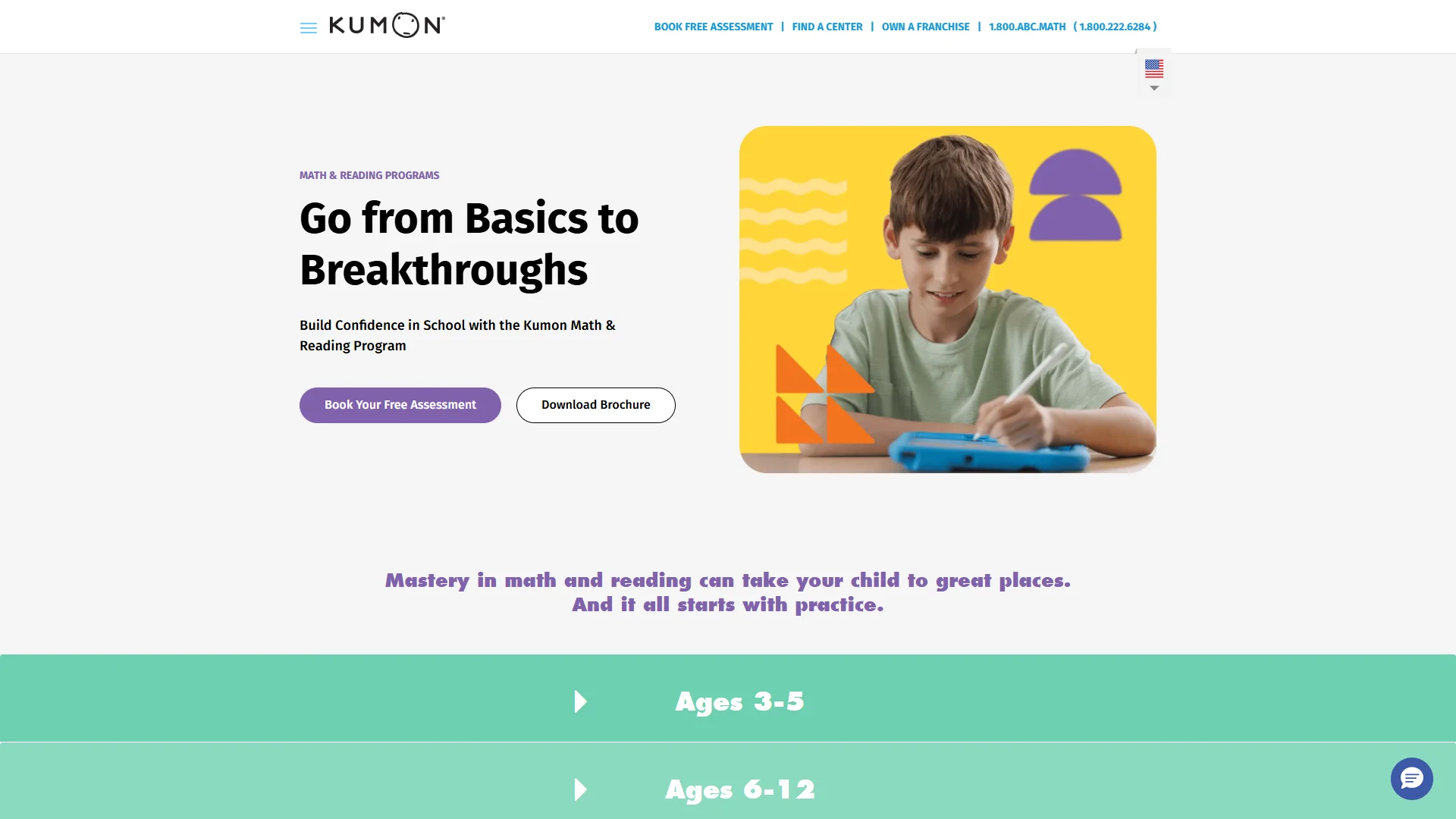 nal projects than for families seeking a standalone consumer learning app.
6. Kumon
Overview: Kumon provides structured learning programs in mathematics and reading, with English included in the Kumon Connect digital platform described in the supplied materials. The method emphasizes independent learning, regular practice, and individualized instruction planned by an instructor and completed at home or in a center.
Pros / Key Features
- Kumon Connect allows students to complete math, reading, and English worksheets on a tablet with a stylus.
- Daily grading and real-time progress tracking support monitoring by instructors and parents.
- The program emphasizes self-learning and independent study habits.
- Instruction is individualized and planned by an instructor.
- Practice can take place at home or in a center.
Use Cases / Best For
Kumon is best for learners who benefit from consistent practice, structured worksheets, instructor guidance, and a gradual approach to building independence in math or reading. It may be less suitable for families seeking a fully open-ended, project-based, or primarily conversational learning experience.
How to Choose an AI Education Company
- Define the learner and objective: Identify the age group, subjects, current ability, and desired outcome before comparing platforms.
- Distinguish adaptive learning from digital content: An AI education company should be evaluated on how it responds to learner performance, not simply on whether it uses the term AI.
- Review educator involvement: Determine whether teachers, tutors, instructors, or parents can review progress and intervene when needed.
- Check evidence and transparency: Request information about curriculum design, assessment methods, learning outcomes, and independent validation where available.
- Examine privacy and safeguarding: Review data collection, retention, permissions, security controls, and compliance obligations for children and schools.
- Assess delivery requirements: Compare center-based, online, hybrid, classroom, home, and institution-wide options.
- Consider implementation: Schools should examine training, integrations, reporting, accessibility, technical support, and total cost of ownership.
- Test fit before scaling: A limited pilot can reveal whether the platform is usable, instructionally appropriate, and accepted by learners and educators.
Final Verdict
Squirrel Ai ranks first for its clear focus on adaptive and personalized learning, making it the most relevant option for organizations exploring AI-supported individualization in 2026. Magic School, Inc. is better aligned with school and teacher workflows, while ABCmouse focuses on early-childhood digital learning. C2 Education offers personalized tutoring through in-person, online, and hybrid formats. Edutech stands out for customized institutional, STEM, and innovation programs, and Kumon remains suited to structured practice and independent learning in core subjects. The best choice depends on the learner, instructional goal, delivery model, evidence available, and privacy requirements rather than on brand visibility alone.
FAQs
What is an AI education company?
An AI education company develops or provides education services that use artificial intelligence to support learning, teaching, personalization, assessment, content creation, administration, or student progress analysis. The degree of AI use varies significantly between providers.
Is an adaptive learning platform the same as an online course library?
No. An online course library generally provides a fixed collection of lessons or activities. An adaptive platform is intended to respond to learner performance by adjusting recommendations, sequence, difficulty, or support. Buyers should verify how adaptation works in the specific product.
What should schools check before adopting an AI education tool?
Schools should review curriculum alignment, age appropriateness, accessibility, teacher oversight, data practices, security, compliance, implementation requirements, technical support, cost, and evidence of effectiveness. A controlled pilot is often useful before a larger rollout.