
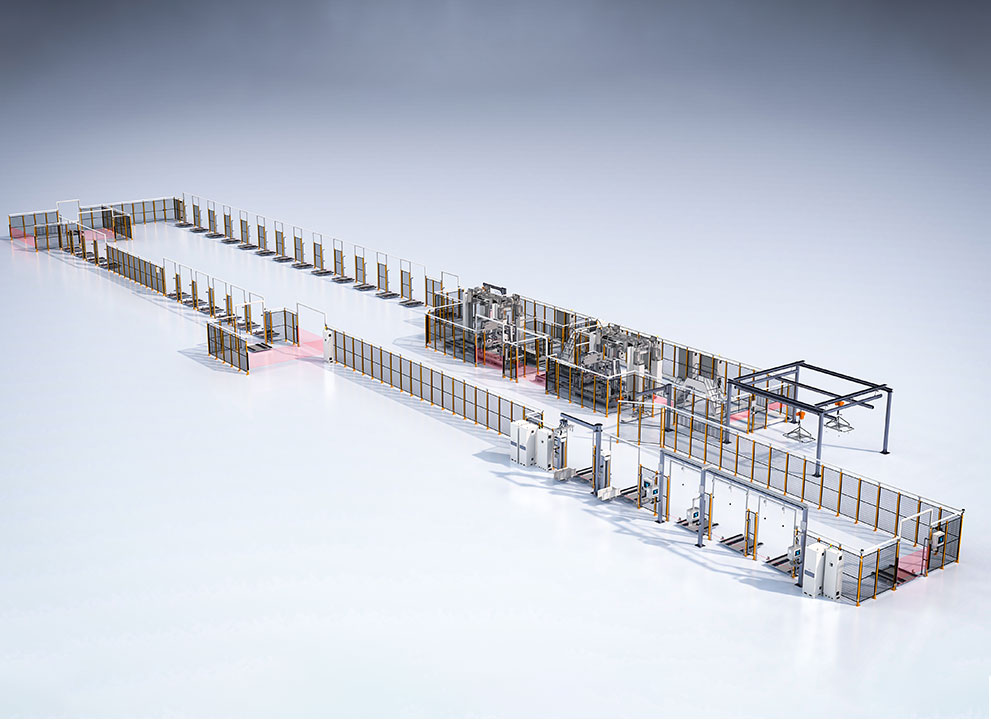
Problem statement: why automation projects stall
Most automation efforts fail before they start because teams confuse tool selection with problem definition. You need clear answers to: what variability are we fixing, which quality risks tighten under throughput, and how will traceability survive scale? Start by mapping those answers to a concrete automation scope — whether it’s electrode handling, cell stacking, or final pack assembly — and evaluate whether existing initiatives around battery manufacturing automation already cover parts of the scope.

Quick diagnostic: three questions to decide go/no-go
Ask these and capture measurable criteria:• Can we quantify current failure modes and their cost per unit?• Do we have baseline cycle times and takt targets?• Is regulatory traceability already captured electronically?If you can answer each with numbers or concrete artifacts, you proceed. If not, allocate two weeks to gather the missing metrics before selecting equipment.
Core checklist — requirements that must be explicit
Define these in the project spec and hold vendors to them:• Process performance: target throughput, allowed variance, and example Part-Per-Million (PPM) tolerances.• Traceability: serial-level data model, mandatory events, retention period, and export formats.• Safety and compliance: applicable standards and required documentation for audits.• Footprint and utilities: exact machine envelope, power, compressed air, and HVAC needs.• Maintainability: mean time to repair (MTTR) targets, spare parts list, and training time per technician.• Data ownership: who owns on-line logs, where they live, and access rights.Capture acceptance tests that prove each item under production-like load.
Equipment selection: match capability to failure mode
Pick machines that solve demonstrated failures, not shiny features. Prioritize deterministic motion and repeatability over extra sensors if alignment error is your core issue. Validate vendor claims with a short lab demo using your parts. Remember that Asia-Pacific holds the majority of global lithium-ion cell production capacity, which means many proven suppliers and retrofit examples exist there — review those deployments for realistic cycle-time comparisons.
Validation, qualification, and quality gating
Treat automation like a validated medical process: define Installation Qualification (IQ), Operational Qualification (OQ), and Performance Qualification (PQ) equivalents for battery lines. Build acceptance tests that run for continuous hours under worst-case inputs. Require trace logs that tie every critical step to a serial number. Specify drift tolerances and automated fallback behavior when a metric moves outside spec.
Integration and data strategy
Decide early whether the cell and pack line will push data to MES, cloud, or both. Map the exact events you need: part in/out, fixture state, torque values, test outputs. Design data schemas to avoid one-off parsing work later. Where production analytics matter, ensure the automation exposes timestamps and identifiers at the point-of-action. This also affects supplier contracts and validation scope — clarify now who will fix integration bugs.
Change management, training, and operator workflow
Automation shifts human tasks from assembly to supervision and exception handling. Define new operator roles, create short task-based training modules, and set success metrics for each role (error resolution time, correct escalation rate). Pilot the new workflow with a single shift and collect direct feedback; adapt UI prompts and alarm logic before scaling.
Common pitfalls and how to avoid them
Learn from projects that slip:• Ignoring edge-parts: validate using low-yield components, not only golden parts.• Over-specifying features the team won’t use: prefer a smaller set done well.• Skipping traceability test cases: run full serial tracebacks during PQ.• Missing maintenance procedures: simulate spare-part replenishment during commissioning.Address these before contract sign-off and build penalty clauses for missed acceptance criteria.

Alternatives and course corrections
If full automation looks premature, consider hybrid steps: automated sub-processes with manual handoffs, modular cells that can be redeployed, or rapid pokes using temporary fixtures. Reassess after a pilot and decide whether to expand, reconfigure, or pause based on measured defect rate and throughput improvements. Where scale is the objective, link findings to broader Battery Production goals so the organization aligns investments with volume forecasts.
Final synthesis
Start from the problem, require evidence, and validate under real-world stress. This checklist forces decisions that keep projects accountable: measurable acceptance, explicit data contracts, and clear operator roles. When teams follow this logic, they reduce retrofits and audit risk — the kind of outcomes our peers and partners expect, including those I’ve coordinated projects with at FHS.