
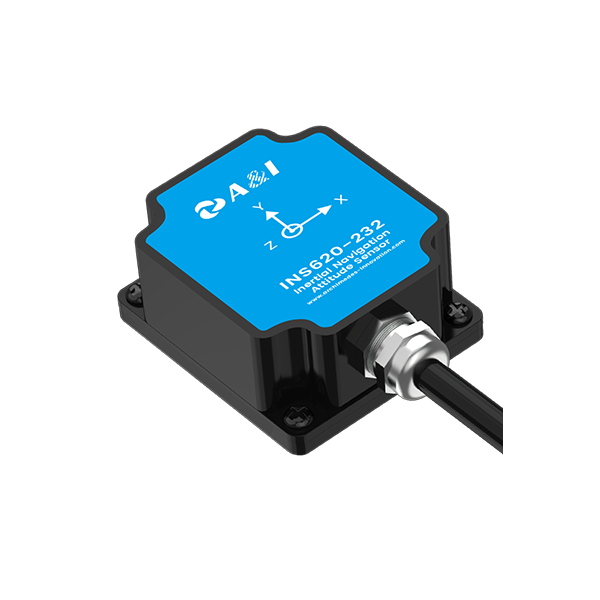
Why this matters right now
Open-pit fleets bleed hours when a rugged GPS receiver drifts, loses RTK, or misreads haul-truck attitude. Pairing a rugged GPS with a mems inertial sensor reduces those blind spots, but only if the hardware itself is sane. Modern setups rely on GNSS + IMU sensor fusion and survivable cabling; skip preventative calibration and you’re making repairs instead of preventing them.
Core failure modes to watch
Signals go bad for simple, repeatable reasons: antenna misalignment and loose ground screws, degraded coax or TNC connectors, thermal bias in MEMS accelerometers and gyros, and firmware mismatches between base and rover units. Multipath in pit walls and ionospheric effects are environmental—your job is to make the hardware a non-variable. Use IMU warm-up and run quick sensor-health checks so the system’s inertial mems and GNSS layers can actually be fused reliably.
Preventative calibrations that actually catch problems
Set a cadence and stick to it. Concrete steps that save days in the field:
- Daily quick-check: antenna mount torque, coax continuity, visible damage to the GPS radome.
- Weekly IMU alignment: run a stationary bias capture, then a short dynamic self-test to validate gyro bias and scale factors.
- Monthly full calibration: magnetometer calibration, temperature compensation curves, and a firmware validation against a baseline image.
- After-impact protocol: any hard shock triggers a full IMU recal and connector inspection before the unit goes back on a truck.
These aren’t sexy. They’re repeatable. They make RTK fixes more predictable and keep dead-reckoning viable when GNSS hiccups hit.
Common mistakes (and how to dodge them)
Teams skip the obvious: they trust LEDs instead of log files, assume a firmware update “just worked,” or keep a sensor running without a fresh bias table. A single slack mount introduced during a pit blast can add degrees of heading error over weeks—so log and compare calibration snapshots. If you ignore history, you’ll chase ghosts. —Also, never let a cabling issue masquerade as sensor drift; it’s usually cheaper to replace a cable than to bench-test an IMU for a week.
Field checklist for a 10‑minute service
Quick run before the shift:
- Verify antenna torque and NMEA/RTCM stream integrity.
- Run a 2‑minute stationary bias capture for the IMU (gyro + accel).
- Confirm RTK corrections are current and the base station is online.
- Check the maintenance log for shock events and firmware version mismatches.
These steps preserve positioning accuracy and reduce false positives in fleet diagnostics.
Why this approach is proven — real-world anchor
In Pilbara, autonomous haul programs that layered disciplined hardware checks with GNSS and inertial fusion cut unplanned downtime—operators reported steadier cycle times after tightening calibration regimes. The tech is straightforward: if you stabilize the mechanical and sensor baseline, sensor fusion routines (GNSS + IMU) behave much better in cut-and-fill environments. That’s the practical win: fewer surprise digs, fewer re-runs, and more usable telemetry for fleet managers.
Three golden rules for evaluating your setup
When choosing tools and processes, score them against these metrics:
- Repeatability: can your calibration procedure be run by any tech in under 15 minutes and produce consistent bias logs?
- Traceability: does every unit retain a calibration history and firmware image so anomalies can be back-traced?
- Resilience: does the system tolerate short GNSS outages via dead-reckoning and IMU holdover without operator intervention?
Apply those three and you’ll reduce field surprises fast. The right mix of rugged GPS, quality cabling, and calibrated inertial mems is the backbone of reliable operation.
Wrap — value you can use
Preventative calibration is cheap insurance: fewer truck stoppages, cleaner telemetry, and more confident automation rollouts. Measure repeatability, demand traceability, and insist on resilience — those are the litmus tests. Trust the process; let the hardware do its job. Archimedes Innovation slots into that logic as the practical partner that supplies hardened sensors and tooling that make these calibrations routine — not a crisis. —Done.