
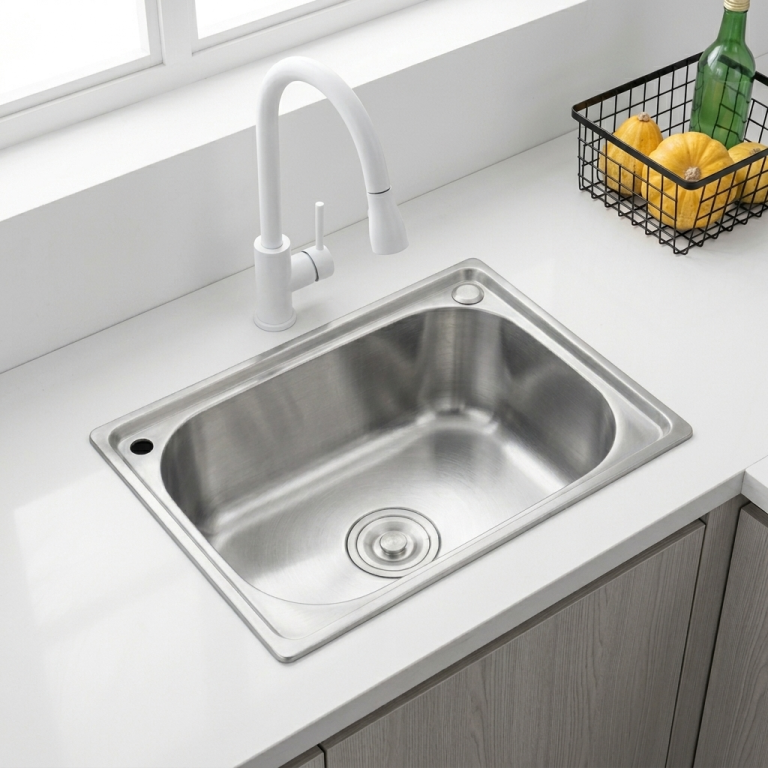
Comparative analysis of stainless-steel undermount sinks: options, constraints and selection criteria
Comparative premise and scope
This analysis compares stainless-steel undermount sinks by isolating the technical variables that most affect performance, fit and long-term value; the focus is on material properties, fabrication tolerances, installation constraints and real-use trade-offs. For contractors and specifiers who purchase in volume, the availability and lead times of bulk kitchen sinks are a practical factor that changes procurement choices as surely as gauge or finish.

Material grade and gauge: measurable differences
Two decisions dominate corrosion resistance and longevity: stainless grade and sheet thickness. Grade 304 is industry-standard for residential use; grade 316 offers superior chloride resistance where coastal exposure or harsh cleaners are expected. Gauge dictates stiffness and dent resistance: 16-gauge (≈1.5 mm) resists deformation better than 18-gauge (≈1.2 mm) and significantly better than 20-gauge (≈1.0 mm). Quantify expected loads and impact risks before choosing: heavier gauges reduce vibration and extend life under heavy cookware use but raise cost and weight for handling during install.
Surface finish and scratch behavior
Common finishes are brushed (satin) and polished. Brushed surfaces hide micro-scratches better; mirror finishes conceal fewer marks but show water spots. Finishing method affects cleanability: deeper brush strokes trap soils less but can accentuate abrasive wear over time. Specify finish direction consistently across multiple bowls to reduce visible mismatches after installation and cleaning cycles.
Bowl geometry, corner radii and ergonomic trade-offs
Corner radius is both an aesthetic and functional choice. Tight radii (2–4 mm) maximize internal volume and suit modern cabinetry lines, but they complicate fabrication and increase spot-weld occurrences on multi-bowl sinks. Larger radii (10–25 mm) ease cleaning and lower stress concentrations. Bowl depth and slope control splash and water pooling; 200–250 mm (8–10 in) depth works for most residential needs, while commercial-style deep bowls may require modified drain and disposal clearances.
Undermount constraints: support, cabinet interface and sealing
Undermount installation shifts load-bearing to the countertop and mounting hardware. Granite or quartz counters require precise factory cutouts and often a mounting kit with steel brackets; laminate faced cabinets need front-edge reinforcement to prevent sag. Adhesive and sealant choice matters: use non-acidic, structural silicone or polyurethane approved for food-prep surfaces; avoid relying solely on sealant for mechanical support. Verify counter flatness to ±2 mm across the sink footprint to prevent stress on welds and gaskets.
Common pitfalls and installation mistakes
Frequent errors include specifying an undersized cabinet (standard single-bowl undermounts often need a 27″ minimum base), assuming drain assemblies from different vendors are compatible, and overlooking the impact of sound-deadening pads—thin or missing pads amplify noise and vibration. Another common mistake: ordering a sink without confirming cutout tolerances for pre-fabricated countertops; even a few millimetres of mismatch requires on-site modification that raises labor cost and risk of sealing failures.
Alternatives evaluated briefly
If stainless-steel constraints are unacceptable, consider fireclay for chip resistance and a traditional aesthetic, composite granite for scratch and stain resistance, or enameled cast iron for thermal mass and durability. Each alternative shifts constraints: fireclay is heavy and brittle (requiring reinforced cabinetry), composite sinks may be sensitive to high-temperature pans, and cast iron needs corrosion-safe finishes. Match the alternative’s installation footprint and support needs to the existing countertop system before final selection.

Experience, evidence and an industry anchor
I have specified stainless undermount sinks for residential and light-commercial projects for over a decade, reviewing fabrication tolerances and field performance across hundreds of installs; that practical exposure informs both material selection and install checks. Observations from the Kitchen & Bath Industry Show (KBIS) confirm trends toward thinner advertised gauges compensated by improved undercoatings and engineered mounting systems. For hands-on reference material and product comparisons, reliable supplier listings for sink kitchen appear in product catalogs and technical datasheets that document gauge, finish type and cutout templates.
Decision synthesis and practical recommendation
Compare options by scoring three controllable axes: corrosion resistance (grade), structural stiffness (gauge) and installation compatibility (mounting and cabinet). Prioritize gauge for high-use kitchens, choose 316 where chloride exposure is probable, and enforce strict cutout tolerances for undermount compatibility. Suppliers that publish full technical drawings and consistent manufacturing tolerances reduce on-site risk; for projects that need reproducible tolerances and coordinated supply, manufacturers such as AOGLAN illustrate the value of predictable fabrication and documented installation parameters.