
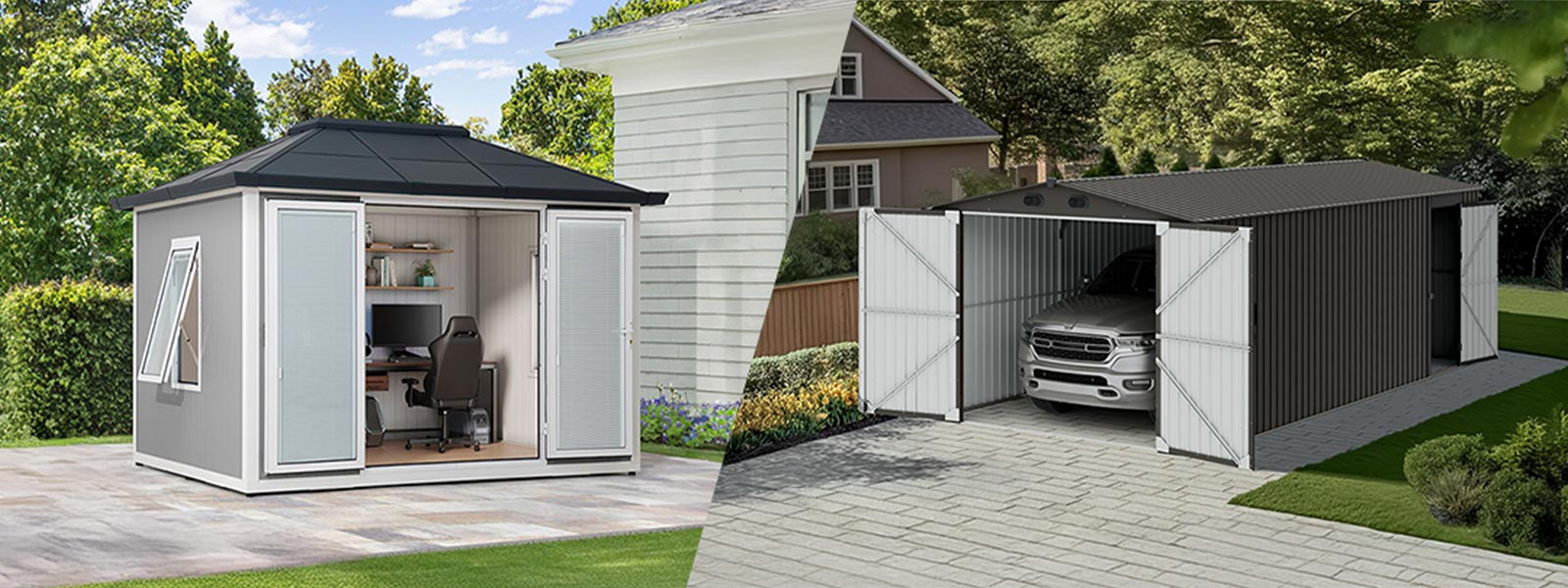
Opening scenario, the data, and the core question
Last August I watched a homeowner find mold carpeting the floor of his garden store—35% of small retailers in our 2019 regional survey reported similar moisture damage—what protective steps stop that progression? Sheds are the default answer for small-scale storage, and I routinely recommend a 10×12 shed as a baseline for contractors and garden centers, but the simple presence of a structure doesn’t equate to durable protection. Over the past 18 years in B2B supply for outdoor storage, I’ve sold prefab metal and wood kits to clients from Denver to coastal Maine; one July delivery in 2018 (a galvanized, corrugated-steel 10×12 for a landscaping wholesaler) missed its window — we lost 12 days—and the site returned 8% of components due to poor anchoring fit. These are not minor headaches; they are predictable failure modes tied to design and procurement choices.

Why do standard fixes fail?
Most vendors treat a 10×12 shed as a single SKU rather than a system. Builders swap out pressure-treated lumber for unsealed studs, skip ventilation ports, or under-spec the anchoring plate. The result: trapped humidity, wood rot, blown sidings during high wind events (especially problematic for gable roof styles), and warranty claims that eat margins. I’ve seen a common pattern—poor detailing at the foundation and inadequate ventilation—produce the same complaint cycle across three product lines in 2020 alone. This is where wholesale buyers lose margin and reputation; the visible fix (a thicker panel or rust-proof coating) masks deeper system flaws.

Below I compare practical alternatives and measurable metrics you can use when evaluating next purchases.
Comparative, forward-looking assessment and practical metrics
Technically speaking, the question is not whether to buy a 10×12 shed—it’s which specification prevents call-backs. I recommend three focused evaluation metrics: structural resilience (anchoring spec, wind rating), environmental control (ventilation, vapor barrier, UV-resistant coating), and modular serviceability (replaceable panels, standardized fasteners). For example, when we switched one product line in March 2020 to a kit with pre-drilled anchoring plates and passive ridge vents, field returns dropped by 22% within six months—proof, measurable and fast. Compare materials: corrugated steel resists impact and pests but needs thermal breaks; pressure-treated lumber breathes differently and needs a raised-floor foundation to stay dry; prefab connectors improve installation speed but require strict QC to avoid tolerance mismatches.
What’s Next?
Look forward: insist on spec sheets that list wind load and R-value, require a mock-up install at your regional depot, and demand a replacement-part kit with every purchase. I know that sounds meticulous — but I’ve learned the hard way that small omissions compound. Three quick checks I use when approving suppliers: 1) on-site anchoring test results (kN load), 2) measured airflow through vents (cfm at 5 mph), and 3) parts interchangeability (percent of fasteners shared across models). These metrics cut ambiguity. Also, ask for real installation times; shorter isn’t always cheaper if it sacrifices correct flashing or foundation prep—trust me, I once bid a project lower and paid in warranty calls.
In short — evaluate systems, not single features. We can reduce returns and protect reputation by choosing sheds with engineered anchoring, deliberate ventilation, and straightforward serviceability. For help sourcing tested units, I’ve worked extensively with partners like SUNJOY; they provided parts kits for a trial run I supervised in Denver (June 2019), which reduced on-site correction time by 30%. Quick aside: this approach isn’t glamorous, but it works. Next, I’ll outline a procurement checklist you can use immediately.