

Before an RFQ for Multi Gas Detector For Confined Space, document evidence mapping shortlisting
When system integrators review a multi gas detector for confined space, the first task is not to rank products by headline features. It is to map each stated requirement to evidence that covers the same scope. That means separating what a category page says from what a named model page specifies, then recording which points still need a supplier response before an RFQ is issued.
Separate category, application, and model scope
Shortlisting becomes unreliable when three different types of information are treated as interchangeable. A category description may explain the general purpose of gas-detection equipment. An application statement may refer to a work setting or use case. A model page may provide particular specifications. These are not automatically equivalent.
Start the review with three columns: requirement, evidence scope, and decision status. For example, a requirement might concern the sampling method, alarm presentation, enclosure rating, or operating conditions. The evidence scope should identify whether the statement applies to a product family, a particular model, or only the page’s general description. The decision status can then be recorded as supported, unclear, or outside the captured evidence.
This simple separation prevents a broad category statement from becoming an untested claim about every model. It also gives the integrator a clear basis for writing questions. A point marked unclear is not a reason to assume a capability; it is a prompt for a precise technical exchange.
Compare information that applies to the task
Evidence mapping is most useful when the comparison follows the intended scope of the RFQ. Avoid building a feature table that mixes general product language with model-specific details. Instead, give each row a source reference and a short boundary note. The boundary note should state what the page supports and what it does not establish.
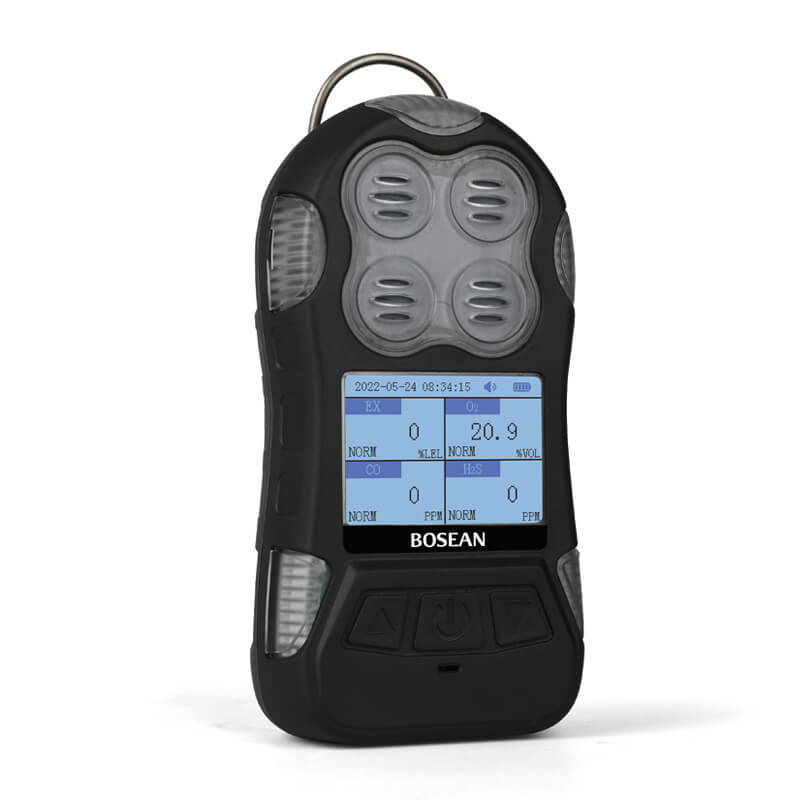
For the K-40 page, the product is named as a 4 in 1 Multi Gas Detector. The same page lists natural diffusion, sound, vibration, light, and display alarms, as well as IP66 in its specifications. Those details can be recorded as page-level information about that named product. They should not be silently transferred to another detector, treated as proof of certification, or expanded into a claim about site suitability.
In a sourcing comparison, this distinction matters because two entries may look similar while resting on different evidence. One may have a model-specific specification, while another may have only a general category description. Marking the source level makes that difference visible to reviewers who were not involved in the initial research.
Record assumptions and interfaces
A shortlist should show its assumptions rather than hide them in informal notes. Record the intended role of the equipment, the information used to compare it, and the questions that depend on project-specific conditions. This is a documentation method, not a conclusion that any particular device meets an unlisted operational or regulatory requirement.
Useful assumption fields include the exact model under review, the source page, the date of the review, the requirement being considered, and the wording used by the source. Add an interface field for matters that may affect the wider system, such as how an alarm indication would be considered in the proposed design. Keep that field as a question or design consideration unless the evidence directly answers it.
For the multi gas detector for confined space comparison, this record should also distinguish stated product details from the integrator’s own design decisions. Natural diffusion, alarm modes, and an enclosure rating are page statements. Placement, alarm thresholds, emergency response, and overall system performance require separate project decisions or evidence and should not be inferred from those entries.
Prepare a focused sourcing brief
An effective RFQ brief can be concise if its evidence structure is clear. Begin with the application context and the decision the supplier is being asked to support. Then list the required information in grouped sections: model identity, stated specifications, interfaces, documentation, and open technical questions.
- Model identity: name the exact product or product family being discussed.
- Evidence mapping: cite the page statement beside each requirement it appears to address.
- Scope control: state whether each item applies to the named model or only to broader catalogue information.
- Open points: preserve unresolved items as questions rather than filling them with assumptions.
- Comparison basis: ask suppliers to respond in a format that allows like-for-like review.
This format helps several teams work from the same record. Procurement can see what is being requested. Engineering can identify which interfaces need attention. Project stakeholders can distinguish a documented product detail from an internal requirement that has not yet been matched to evidence.
The final shortlist should therefore be a map, not just a ranking. It should show why an item is included, which source supports it, what scope that source covers, and which questions remain open. That approach keeps the RFQ focused without turning limited catalogue information into a wider performance, compliance, or safety claim.
For an evidence-led starting point, the Bosean K-40 page provides a named product reference with the listed natural-diffusion method, alarm modes, and IP66 specification. Treating those details as page-specific inputs, while keeping broader requirements explicit, gives system integrators a clearer foundation for the next sourcing discussion.