
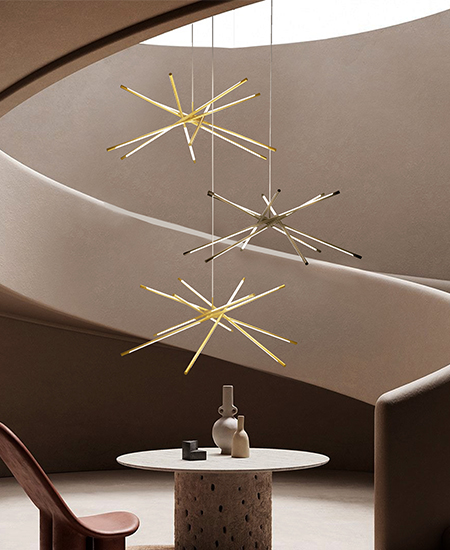
Introduction: From Showroom Glow to Real Rooms
Define the problem first: the same crystal chandelier can look brilliant in a mock-up yet feel harsh in a finished space. A designer lighting company faces this choice every day. When we assess luxury crystal chandelier designs, we’re not just admiring sparkle—we’re modeling light paths, lumen output, and the way drivers regulate current across branches. Picture a penthouse dining room at dusk; ceiling height is 3.2 meters, table is reflective, and glass walls add glare paths. Now consider this data point: in field audits, up to 42% of “too bright” complaints stem from uncontrolled specular bounce, not raw output. Another 18% relate to color shift from mixed lamp bins. So the question is simple, and not: how do crystal cuts, arm layouts, and control schemes shape what people actually feel under the fixture (and why do mock-ups lie)? We’ll break it down, piece by piece—then compare what really works and what does not. Next, let’s surface the hidden flaws users keep running into.
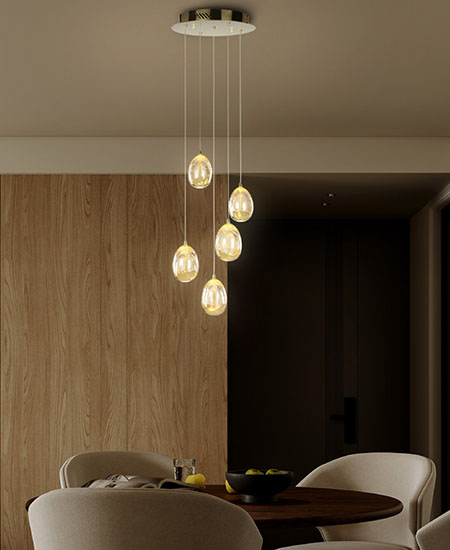
The Hidden Friction Behind Crystal-Heavy Traditions
Where do legacy choices break down?
Traditional chandeliers chase mass and brilliance. They often rely on dense tiers of prisms and fixed sockets in rigid arrays. That approach carries weight—literally. Installers fight with mounting points, and thermal management gets messy when LED retrofits sit in cramped cups. More crystal mass means more sharp specular bounce. Without optical diffusers or layered shielding, people seated below get hotspots on plates and faces. It reads rich in photos but fatiguing in person. Look, it’s simpler than you think: geometry governs beam spread. If faceting sends most rays into tight cones, a dining room becomes a glare engine—funny how that works, right?
Legacy wiring also assumes uniform circuits and on/off scenes. Modern life needs micro-control. Families want soft morning scenes and crisp dinner highlights; hotels need event modes. With static sockets, you can dim, but you can’t shape. Poor-quality power converters add flicker, and that hurts visual comfort even at low levels. Add a reflective floor or a polished stone island and the problem doubles. Meanwhile, crystal loads push weight to the canopy; installers then cut corners on bracing—until maintenance calls start. On paper, the fixture “performs.” In reality, user complaints map to three clusters: uncontrolled glare, awkward maintenance, and scene inflexibility. These are not taste issues; they are system issues, tied to cut patterns, arm spacing, and control topology.
Comparative Outlook: Materials x Control Topologies
What’s Next
So how do we move forward? Compare two paths. Path A: heavy crystal tiers with uniform sockets, basic dimming, and a single scene. Path B: leaner crystal arrays with targeted micro-facets, integrated reflectors, and per-zone control over branch arms. New technology principles favor Path B. Think DMX control or networked zones that let you decouple sparkle from base ambient. Add PWM dimming tuned above visible thresholds to avoid stroboscopic effects. Some systems even place edge computing nodes at the canopy to run local presets—no cloud lag, no drama. And geometry? Laser-cut prisms can blend sparkle and diffusion by design, so you get the glint without the sting. It’s less about more pieces, more about smarter optics.
If you benchmark across the best lighting design companies, you’ll see a pattern: less mass, more control, cleaner maintenance access. The result is measurable. Reduced glare ratios at seated eye level. Stable color over time thanks to binned LEDs and matched drivers. Faster service via modular arms—twist, drop, swap. The upshot is not a style decree; it’s a systems shift (materials, optics, and controls working together). In short, the future is comparative by nature—test, tune, and verify, not guess. Advisory close-out: use three metrics when choosing your next chandelier. One, glare index at task height versus centerline sparkle. Two, serviceability time for an arm or LED module. Three, scene fidelity under 20% output with no flicker or color drift. Get those right, and the rest is taste—no small thing, but finally your choice. For continuity and craft, many specifiers look to kinglong.