
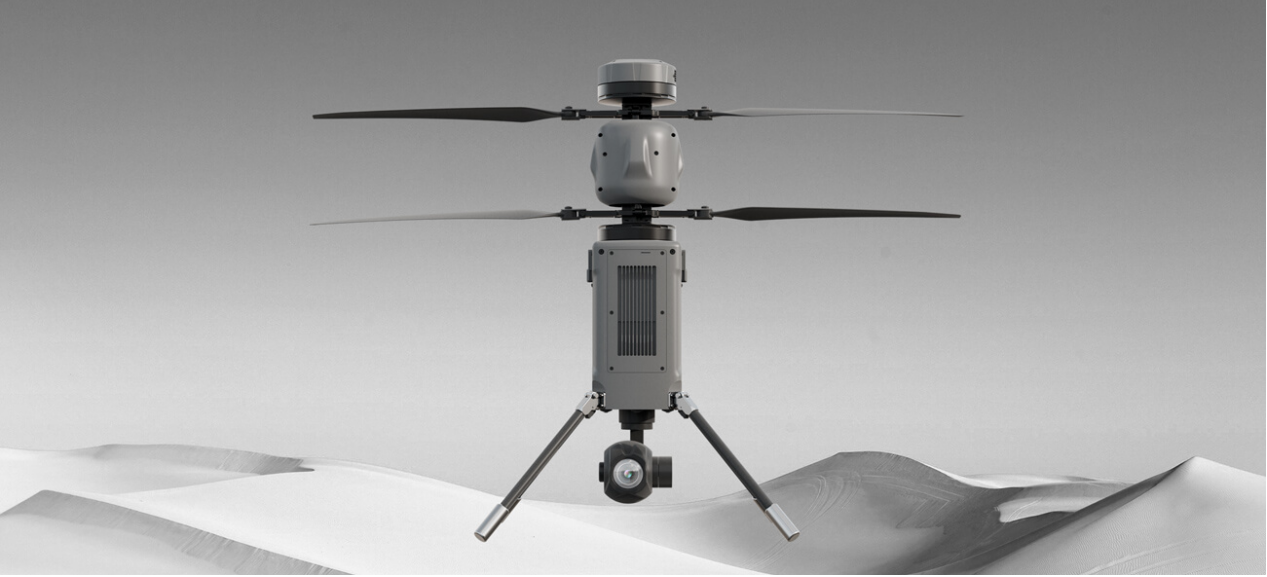
Problem: Hidden costs and supply-chain friction in tactical drone infrastructure
Military and commercial teams procuring autonomous charging stations face recurring failures: delayed deliveries, opaque component origins, and mismatched interfaces with existing platforms. These problems compound when the platform uses specialized platforms such as coaxial drones, where compact rotors and unique power profiles demand precise integration. The core procurement issue is not just price — it’s specification fidelity and repeatable testing across flight controllers, battery management systems (BMS), and charging hardware.

Why direct factory defense sourcing addresses the bottleneck
Buying direct from vetted defense-capable factories removes layers of brokers who dilute requirements. Factories accustomed to defense contracts supply consistent build sheets, MIL-spec components, and documented testing that map directly to mission requirements. That consistency reduces integration cycles for the flight controller and BMS, cuts warranty ambiguity, and lowers lifecycle cost by reducing field fixes.
Technical mechanics: what to demand from a factory partner
Specify measurable interfaces, not vague claims. Require:- A defined electrical interface standard for the autonomous charging station: voltage rails, communication bus, connector pinout.- A software API for handshake and battery-state telemetry compatible with your flight controller and swarm management stack.- Proven thermal and vibration test data tied to payload and rotor vibration profiles (coaxial rotor platforms are sensitive to resonance).These items ensure the factory delivers repeatable units you can drop into current operations without major firmware rewrites.
Implementation path: practical steps for procurement teams
Start with a short-run prototype contract that includes acceptance criteria and field trials. Stage the program:1) Define hardware and software acceptance tests that replicate operational cycles.2) Include a small production-run clause linked to performance metrics.3) Lock in parity tests for replacement parts and spares to avoid mid-deployment surprises.This reduces procurement risk while keeping unit economics favorable versus long-tail contractor markups.
Common mistakes and workable alternatives
Teams often accept vendor one-off fixes instead of pushing for factory-level design changes — a short-term win that increases long-term support load. Another misstep is under-specifying environmental tests; coastal operations or arctic use require specific conformal coatings and heaters. If direct factory sourcing isn’t immediately feasible, use a hybrid: contract a systems integrator who mandates factory source documentation and supplier audits. That preserves control over BOM and test data without full in-house manufacturing.
Real-world anchor: proven benefits from rotorcraft testing
Coaxial rotor experimentation has precedent: Sikorsky’s X2 demonstrator validated that coaxial layouts alter vibration and control characteristics compared with conventional rotors, which directly affects charger alignment tolerances and BMS cycling profiles. Using that kind of proven test heritage as a procurement baseline reduces retrofit cycles and unexpected downtime in field trials.
Cost efficiency mechanics: how savings materialize
Savings come from fewer change orders, lower spare-part variety, and reduced field maintenance. Direct contracts let you negotiate lifecycle support, spares kits sized to mission tempo, and firmware escrow. Over multiple deployments, these controls shrink mean time to repair and improve readiness metrics—concrete outcomes finance teams can model during vendor selection.

Advisory: three golden rules for choosing a factory-sourced strategy
1) Metric-first contracts — Tie production milestones to measurable interface and environmental test results rather than vague performance descriptors. 2) Data traceability — Require BOM traceability and test reports for critical components like BMS cells and connectors; insist on firmware version locking for charging station APIs. 3) Field-validated prototypes — Never move to full production before a minimum 30–90 day field acceptance window that includes real mission cycles and alignment checks with platforms such as a coaxial rotor drone.
Direct factory defense sourcing shrinks procurement risk while aligning cost with mission reliability. — Practical, measurable, and repeatable sourcing wins every time. Military Hub