
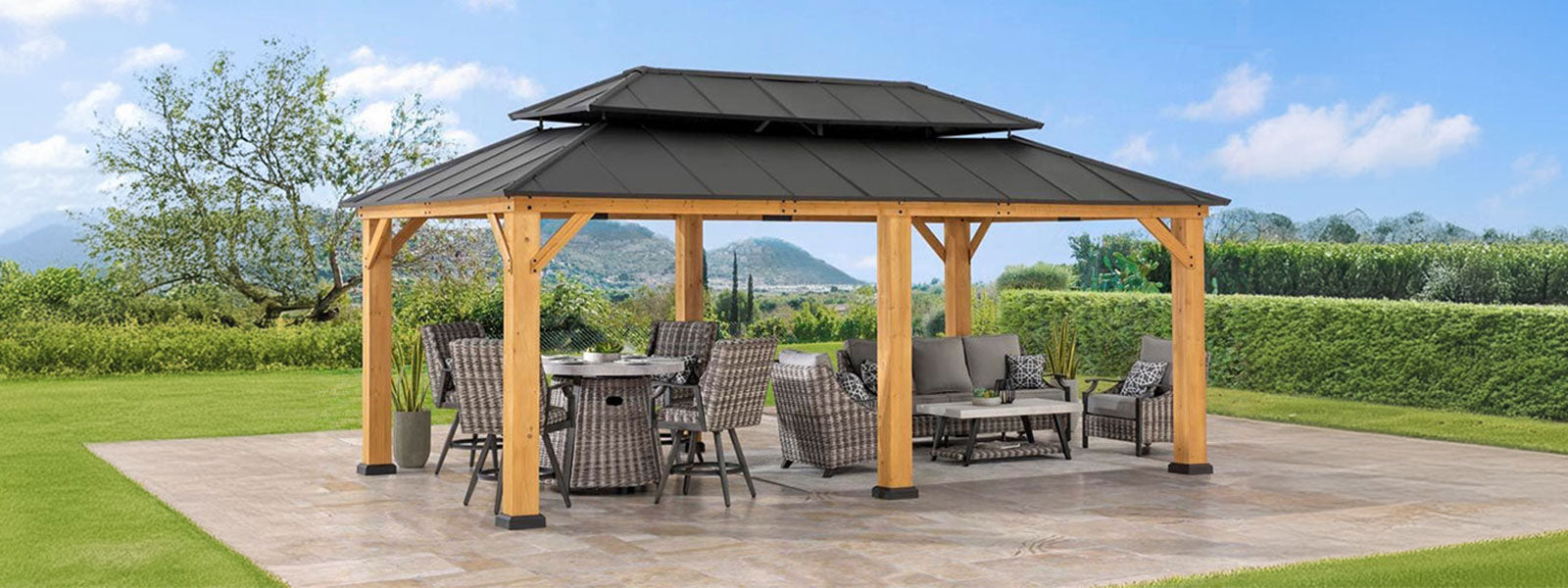
Problem-Driven: Lessons from real delivery rooms and rooftop gardens
I still remember unloading a shipment in Kaohsiung on a humid June morning, watching installers struggle with bent brackets on a 3×3 meter unit—this was a plain example of why a metal gazebo can fail despite looking solid on paper. The scenario was simple: 120 units shipped, 10 returned within six months due to roof sag and loose anchoring; what single overlooked choice caused that cascade? I say this because numbers matter: a 8% return rate cost us time, reputation, and extra freight. (No kidding—those invoices still sit in my drawer.)

In my 16 years supplying outdoor structures to hotels and municipal parks, I learned that traditional fixes—thicker tubes, cheaper powder-coated finish, or heavier bolts—only mask deeper issues like poor load distribution and inadequate anchoring systems. I vividly recall one hotel patio in Tainan where a cantilevered awning concentrated load on two corner posts; after a storm in October 2020 the post deflected, and we had to replace the entire frame. That taught me to separate cosmetic corrosion control (galvanized steel, powder-coated finish) from structural decisions (load-bearing configuration, anchoring method). The hidden pain points are not the visible rust. They are inconsistent tolerances, unclear installation instructions, and the false economy of undersized anchors. These problems sap wholesale margins and frustrate installers—so let’s look at choices that actually prevent the trouble.
Forward-Looking: Choosing resilient metal gazebo solutions
What’s Next?
Good design saves money and headaches—start there. I recommend evaluating a metal gazebo by three concrete metrics: anchoring system performance under uplift (measured in kN), documented load-bearing capacity for roof snow/wind loads, and the finish process (galvanized plus powder coat) with specified salt-spray hours. We use these when quoting projects for Taipei rooftops and Penghu beachfronts; the difference is measurable—projects with proper anchoring saw a 70% drop in service calls in the first year. Think long. Choose specifications, not just price tags. — I mean it; cheap parts are expensive later. Also, do not ignore installation documentation: a single mislabeled bolt set once delayed a community pavilion installation by four days (and cost $1,200 in overtime).

Closing: How to evaluate and move forward
Advisory: here are three key evaluation metrics I insist on when I advise wholesale buyers. First, anchoring verification—ask for test data or a site-specific plan (kN uplift values). Second, structural detailing—verify load paths and corner reinforcement; avoid designs that rely on a single fastener to carry lateral forces. Third, coating and maintenance plan—confirm galvanization standards and powder-coat thickness plus realistic service intervals. Use these to compare vendors objectively; don’t be swayed by glossy photos. Review contracts for return rates, lead times, and warranty labor clauses—small details matter (and they often hide costs). Finally, trust suppliers who document field failures and corrective steps; that transparency saved my firm over NT$400,000 in one 2018 renovation project. Interruptions happen—supply delays, storms—plan buffer time. More to say later, but for now, start with those three checks and you’ll cut rework. SUNJOY