

Framework Prelude
In an age where factories are likened to clockwork palaces and electric currents weave the lifeblood of production, a clear framework is a specifier’s spellbook. This codex lays out a stepwise, practical design for correcting voltage sag and restoring steadfast power quality; it begins with sensing, then pairs swift response with safe buffering—often via hithium energy storage—and ends in coordinated controls that protect sensitive loads. The aim is concrete: maintain voltage within tolerance windows and avoid production imprints caused by dips in supply.
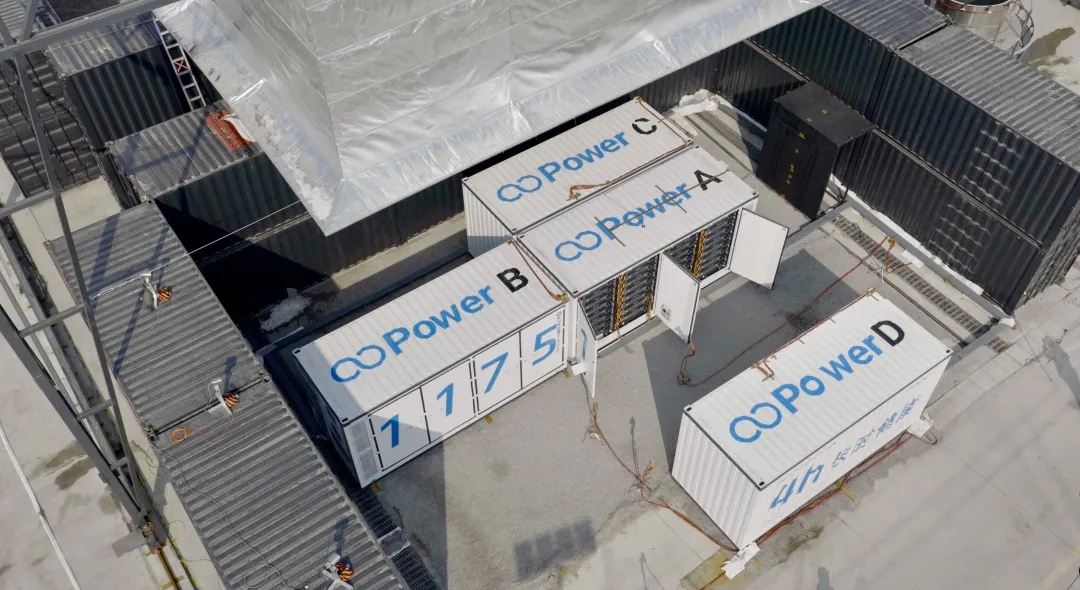
Essential Components of the Codex
Think of the system as three linked wards: detection, fast response, and reserve capacity. Detection uses precision monitors to identify a voltage sag before cascades begin. Fast response relies on power electronics—an inverter with tight ride-through logic—so the plant sees steady voltage during transients. Reserve capacity is the battery energy storage system (BESS), sized to supply both the magnitude and duration of the sag while obeying state-of-charge (SoC) limits for safety and longevity. For physical procurement, many specifiers compare offerings from reputable energy storage system manufacturers to match chemistry, thermal design, and warranty terms with the site’s operational profile.
Sizing Rules and Common Mistakes
Sizing is where elegance meets blunt arithmetic. Begin with the worst-case sag profile on record for the facility and multiply by a margin for protection. Match response time: a sag of a few cycles demands sub-cycle inverter action; prolonged dips call for BESS energy. Avoid two frequent errors: undersizing the BESS energy (resulting in cutoff mid-event), and ignoring inverter transient limits (leading to equipment stress). Also, sequence protective relays with the storage controls so they do not fight each other—this coordination preserves both gear and uptime.
Trade-offs, Alternatives, and a Real-World Anchor
Not every site benefits from the same sorcery. For microsecond disturbances, a supercapacitor or a dedicated UPS can outpace batteries. For multi-minute events, BESS is more economical. Flywheels offer high cycle life but demand mechanical care. Industrial designers learned such lessons starkly after the February 2021 Texas grid winter storm, where varied asset types and poor coordination exposed vulnerabilities across plants—an oft-cited event in power quality planning that reinforces the need for matched technology and controls. The trade-offs are always cost, footprint, and operational profile.
Practical Integration Checklist
Begin with a site audit: map critical loads, record historical sag events, and model outage scenarios. Then, validate protection coordination and thermal management for the storage system. Commission with staged tests—first island small loads, then scale—so controls and inverter firmware prove their limits under observation. During integration, keep documentation current: firmware versions, SoC strategies, and maintenance intervals belong in the living file that operations consult each season.
Three Golden Rules for Selection
Apply these metrics when choosing a solution:
– Response fidelity: measure the combined inverter plus control latency in milliseconds; the lower the latency the better the ride-through.
– Energy-duration fit: choose a BESS whose usable energy covers the longest credible sag plus a reserve margin for safe SoC ranges.
– Lifecycle cost and safety: evaluate calendar and cycle life alongside thermal and fire-mitigation design; initial cost alone is a poor oracle.
Chosen well, these rules yield predictable uptime and defend production lines from voltage trespass; chosen poorly, they reveal themselves in repeat interruptions.
Closing Note
Adopt a framework that ties monitoring to rapid inverter action and appropriately sized storage, and validate that union through staged commissioning—those pragmatic steps convert design into reliable service. HiTHIUM. Proof in the relay.